NEET UG 2026 Dress Code: Rules for Male & Female Candidates, Shoes, Jewellery & Accessories Rules

NEET UG 2026 dress code for male and female candidates, what to wear in NEET exam, shoes, sleeves, jewellery rules NTA — Check complete official dress code, allowed clothes, banned items, footwear rules and exam day guidelines here.
The National Testing Agency (NTA) has released the official NEET UG 2026 Dress Code to ensure strict security and prevent unfair practices during the examination. Every candidate must follow these guidelines carefully, as even a small violation can lead to extra frisking, delayed entry, or denial of entry at the examination centre.
The main purpose of the NEET dress code is security and fairness. Items like long sleeves, heavy clothes, shoes, or jewellery can be used to hide micro devices, notes, or electronic gadgets. To prevent cheating and ensure smooth frisking of lakhs of candidates, NTA allows only simple, light, and minimal clothing.
Following the dress code helps in faster entry, avoids unnecessary checking, and ensures a stress-free exam experience.
Official NTA Dress Code Rules
- 1. Heavy clothes and long sleeves are not allowed
- 2. Only light and simple clothes are recommended
- 3. Slippers or sandals with low heels are allowed
- 4. Candidates in religious/customary dress must report early (before 12:30 PM)
- 5. Special cases require prior approval from NTA
NEET Dress Code for Male Candidates
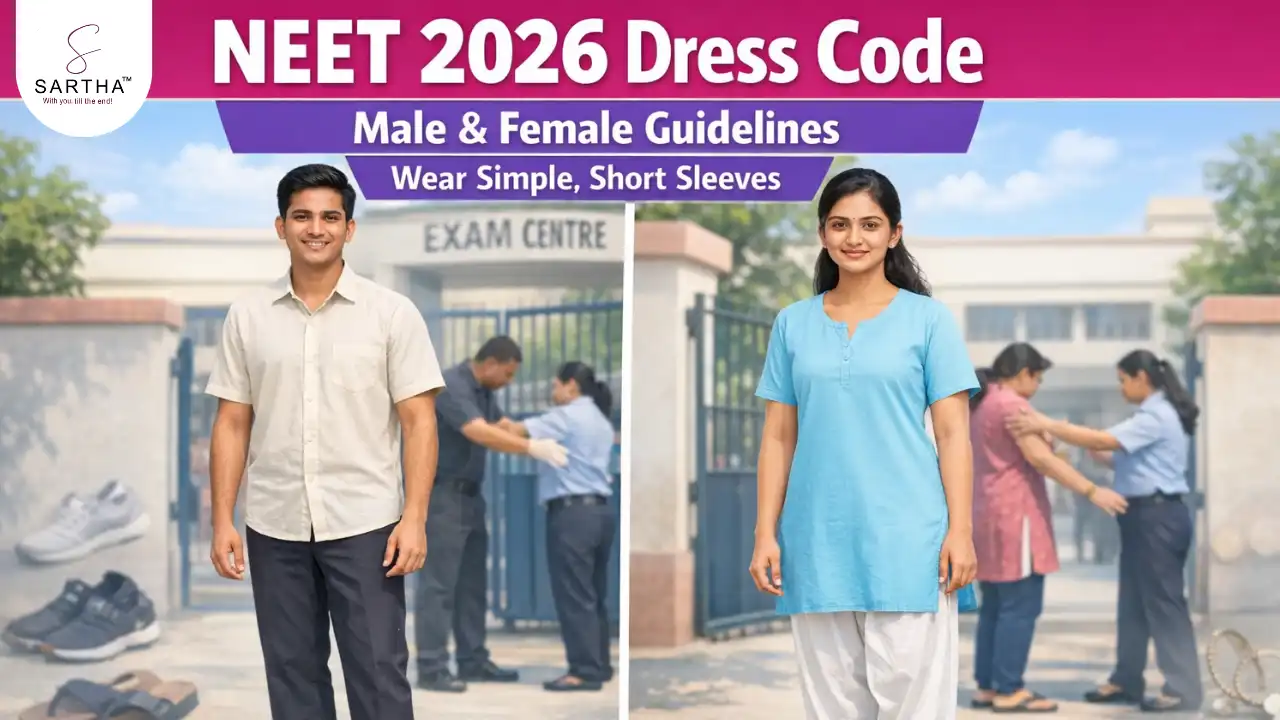
Male candidates must wear simple and comfortable clothing without any extra layers or metallic attachments.
| Category | Guidelines |
|---|---|
| Upper Wear | Half-sleeved shirt or T-shirt only |
| Lower Wear | Simple trousers or plain pants |
| Footwear | Slippers or sandals only |
| Avoid | Full sleeves, cargo pants, jeans with pockets, shoes, belts |
Male candidates should avoid clothes with large buttons, badges, zips, embroidery, or multiple pockets as these may lead to extra checking.
NEET 2026 Telegram Updates
Get Cutoff PDFs, Fee Structures, and Counselling News for the 2026 session.
 Join Telegram Channel
NEET Dress Code for Female Candidates
Female candidates must choose light, simple, and comfortable clothing that allows easy frisking.
| Category | Guidelines |
|---|---|
| Upper Wear | Half-sleeved kurti/top/shirt |
| Lower Wear | Salwar, leggings, or plain trousers |
| Footwear | Slippers or simple sandals |
| Avoid | Full sleeves, heavy dresses, palazzo, layered outfits, shoes |
Female candidates must avoid heavy embroidery, fancy dresses, jackets, multiple layers, or decorative clothing as they can delay the frisking process.
Jewellery & Accessories Rules
- No earrings, rings, chains, bangles, nose pins, anklets
- No watches or wristbands
- No metallic items
Footwear Rules
- Allowed: Slippers, sandals (low heel)
- Not Allowed: Shoes, boots, sports shoes, high heels
Shoes are strictly restricted because they can hide electronic devices or unfair materials.
NEET WhatsApp Updates
Join SARTHA™ for NTA Notices, State Counseling alerts, and Seat Matrix updates for NEET 2026.
 Join SARTHA™ WhatsApp Channel
Rules for Religious / Customary Dress
- Allowed: Hijab, turban, burqa, etc.
- Must report before 12:30 PM
- Extra frisking will be done
Candidates must declare such attire during application or be ready for detailed checking.
Security & Verification Process
- Metal detector frisking
- Biometric verification
- Face authentication
- Videography during exam
Common Mistakes to Avoid
- 1. Wearing full sleeves
- 2. Wearing shoes instead of slippers
- 3. Carrying jewellery or watch
- 4. Wearing heavy or layered clothes
- 5. Ignoring reporting time for religious dress