Supreme Court Asks NBEMS to Justify NEET PG 2025 Cutoff Reduction

Supreme Court Asks NBEMS to Explain NEET PG 2025 Cutoff Reduction
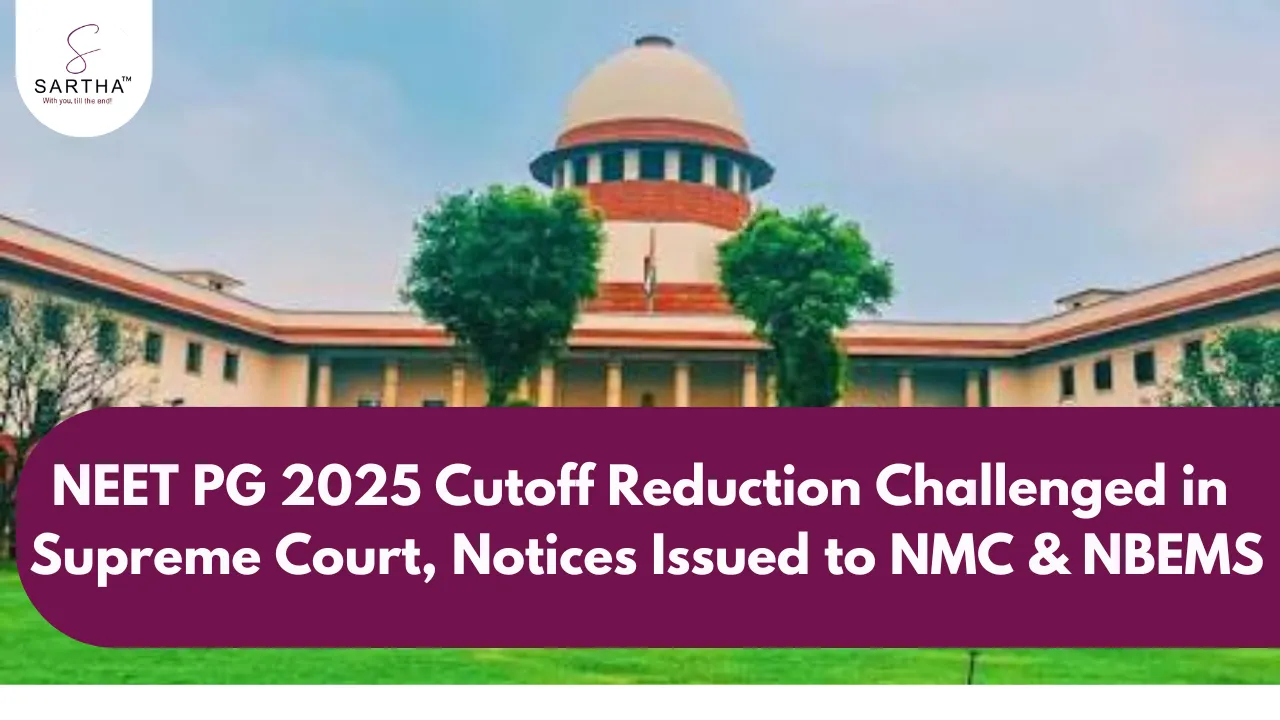
The Supreme Court of India, on 6 February 2026, directed the National Board of Examinations in Medical Sciences (NBEMS) to submit a detailed affidavit explaining the reasons behind the sharp reduction in qualifying percentiles for NEET PG 2025. The direction came during the hearing of a Public Interest Litigation (PIL) that has triggered serious debate within the medical community.
The court made it clear that it must be satisfied in its “conscience” that the decision to lower the cutoff was not taken for any improper or arbitrary reasons. The bench underlined its responsibility to protect the integrity and quality of postgraduate medical education in the country.
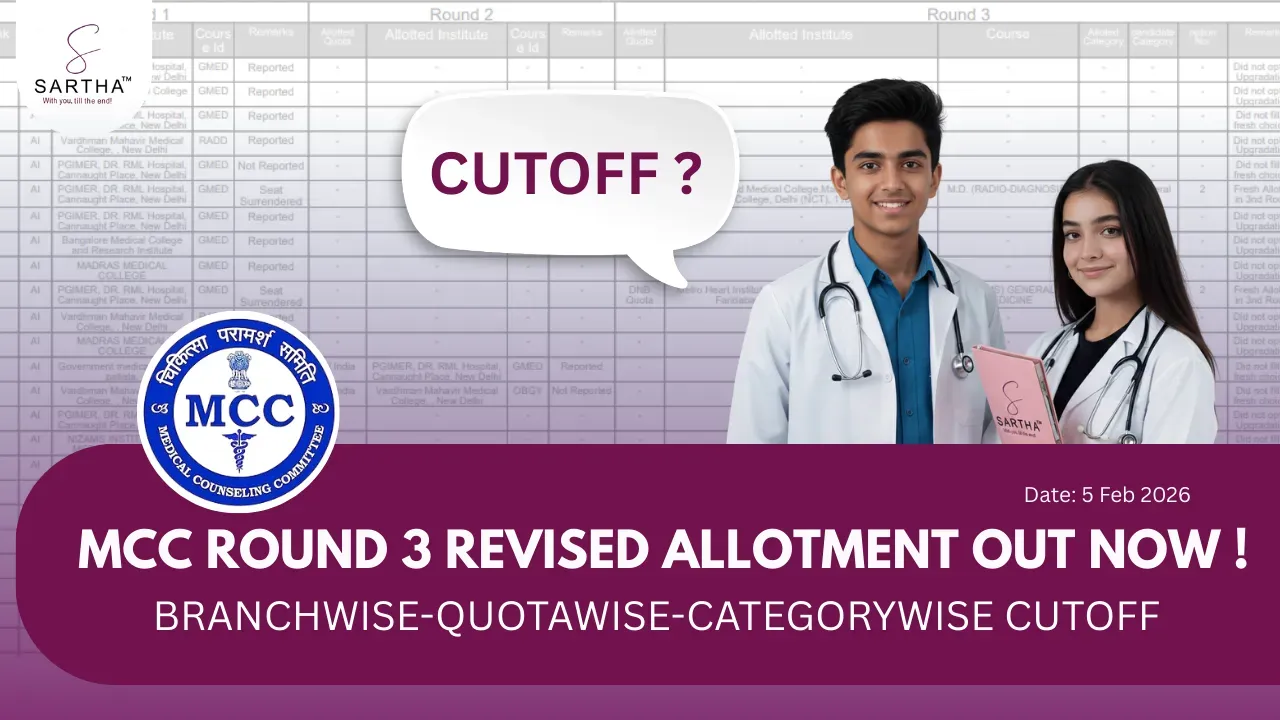
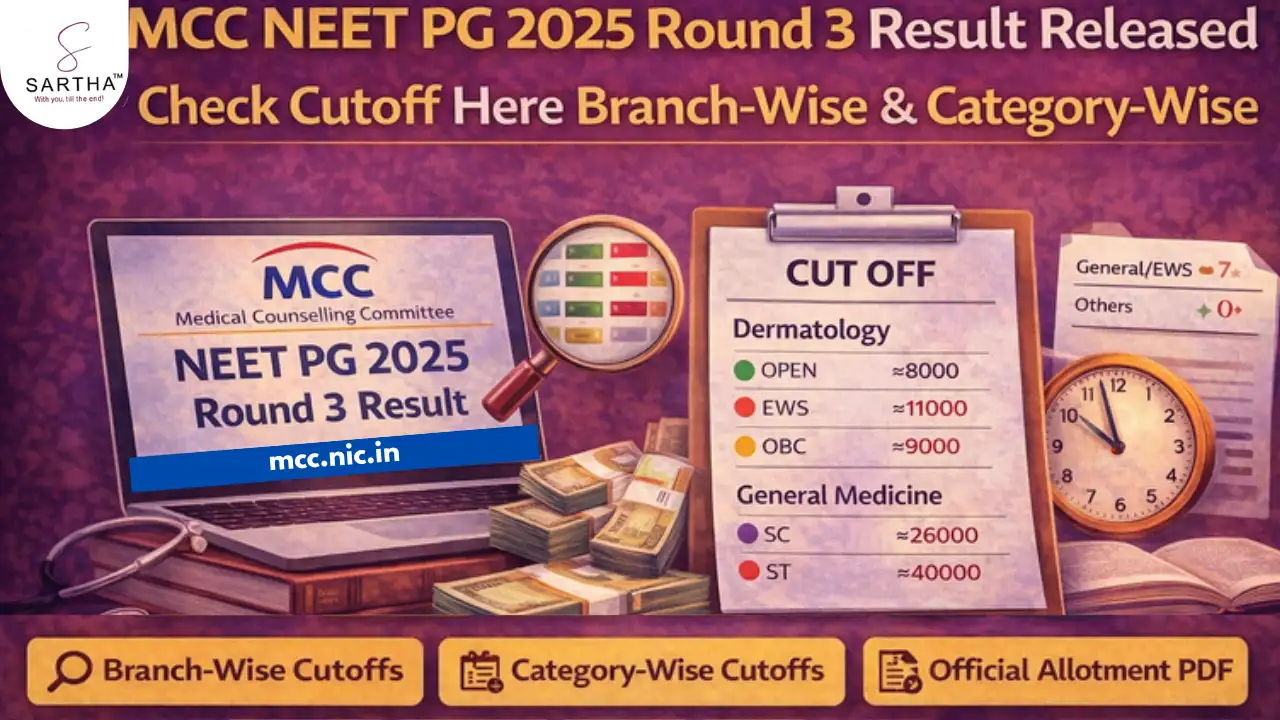
The controversy arise after NBEMS issued a notification dated 13 January 2026, drastically reducing the qualifying percentiles for NEET PG 2025 counselling. For General and EWS candidates, the cutoff was reduced from the 50th percentile to the 7th percentile.
Similarly, the qualifying percentile for General PwBD candidates was lowered from the 45th percentile to the 5th percentile. For SC, ST, and OBC candidates, including PwBD in these categories, the cutoff was reduced from the 40th percentile to the 0th percentile, even allowing candidates with negative scores to qualify.
NBEMS stated that the reduction was aimed at filling vacant postgraduate seats during Round 3 counselling. However, critics argue that such a steep drop weakens merit-based selection and poses long-term risks to patient safety and public health.
NEET PG Round-4 is your next big chance!
But don’t take decisions blindly — get a data-driven & branch-wise
prediction of where you can actually secure a seat! ( View Sample Report )
🔹 Personalized College Predictions – Branchwise & Collegewise
🔹 AIQ + State Counseling Options Covered
🔹 Detailed PDF Report Based on Your Rank ( 10 Reports )
🔹 Cut-off Analysis | Fees | Stipend | Bond | Seat Type
🔹 Verified by Experts & HODs of top medical colleges
🔹 Trusted by 100K+ Doctors & Medicos across India
Your strategy in Round-4 can change your entire career path..
Make decisions smartly with 100% reliable & updated data 🏆
A bench comprising Justice Pamidighantam Sri Narasimha and Justice Alok Aradhe examined the competing interests involved in the decision. Justice Narasimha observed that the issue requires balancing two important concerns — preventing wastage of seats and maintaining academic standards.
The bench noted that while vacant seats are undesirable, lowering standards excessively may have serious consequences. The court indicated that it would closely examine whether the decision to reduce the cutoff was reasonable or “drastically wrong.”
Arguments Raised by the Petitioners
Senior Advocate Gopal Sankarnarayanan, appearing for the petitioners, argued that the reduction violated existing regulations which permit lowering cutoffs only when there is a shortage of qualified candidates.
He pointed out that with nearly 80,000 postgraduate seats available and over 1.28 lakh candidates qualifying under the original cutoff standards, there was no genuine shortage that justified such an extreme reduction.
The petitioners also relied on earlier Supreme Court judgments, including the Preeti Srivastava case, which emphasised that postgraduate medical education requires stricter merit standards than undergraduate courses.
The Supreme Court highlighted that medical education directly affects human life and public health. The bench stated that it must ensure the decision was not taken with any hidden or improper intent and that minimum standards are not diluted merely for administrative convenience.
Petitioners argued that the cutoff reduction violates Articles 14 and 21 of the Constitution by allowing unequally prepared candidates into specialist medical training, potentially compromising patient safety.
The Supreme Court has issued notices to the Union Government, NBEMS, the National Medical Commission, and other concerned authorities, asking them to file replies within one week.