NEET UG 2026 Dress Code Released: What to Wear & What Is Not Allowed on Exam Day, Shoes, Sleeves, Jewellery Rules Explained

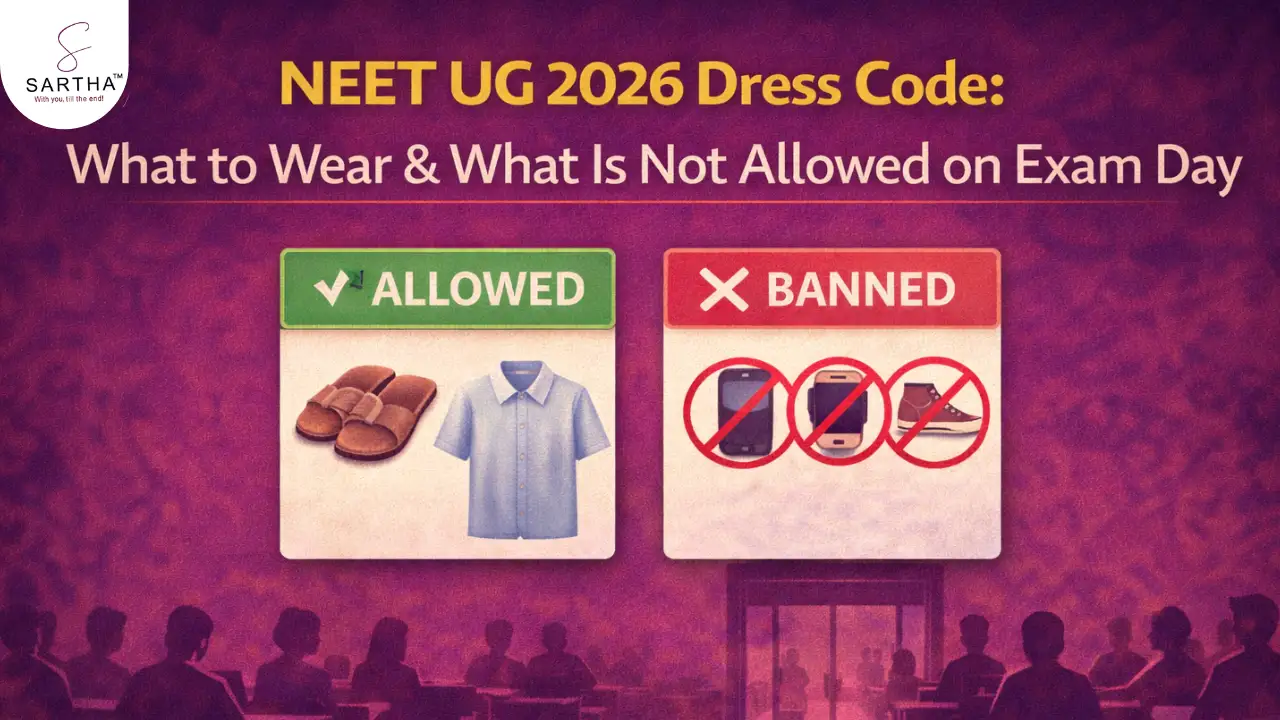
NEET UG 2026 Dress Code – Mandatory Rules for Exam Day
The National Testing Agency (NTA) follows a very strict dress code for NEET UG 2026 to maintain fairness and prevent unfair practices during the examination. Every candidate appearing for NEET must follow these rules carefully. Even a small violation can lead to delay in entry, extra checking, or in some cases denial of entry to the examination hall. So, candidates should decide their exam-day clothing in advance instead of making last-minute choices.
The purpose of the dress code is security. Items like long sleeves, heavy clothing, jewelry, or shoes can hide small electronic devices or written material. To avoid such possibilities, NTA allows only simple and minimal clothing so that frisking can be completed quickly and smoothly for lakhs of candidates across centres.
NTA Dress Code Instructions (Official)
Candidates are instructed to follow the official guidelines strictly while appearing for NEET UG 2026. Heavy clothes and long sleeves are not preferable. If a candidate comes in cultural or customary dress, they must report at least one hour before the last reporting time (12:30 PM) so proper frisking can be completed without inconvenience.
Slippers or sandals with low heels are recommended. If any deviation is required due to unavoidable medical conditions, prior approval from NTA must be taken before the admit card is issued. Following these instructions helps ensure smooth and fair conduct of the examination.
Security Checking and Verification Process
All candidates will undergo compulsory and extensive frisking before entering the examination centre using sensitive metal detectors. Apart from frisking, candidates may also undergo biometric verification, face authentication, and videography for identity confirmation.
NTA has clarified that female candidates will be frisked inside a closed enclosure by female staff only to maintain privacy and sensitivity. Candidates are advised to cooperate with security staff to avoid delays on exam day.
NEET Dress Code for Male Candidates
Male candidates should wear light and simple clothes. Only half-sleeved shirts or T-shirts are allowed. Full-sleeved shirts are not permitted because they make checking difficult. Clothing should not have large buttons, badges, metallic attachments, embroidery, or thick pockets.
Candidates should wear simple trousers or plain pants. Avoid cargo pants, designer jeans, or clothes with multiple pockets and zips. Footwear must be open slippers or simple sandals with thin soles. Shoes, boots, sports shoes, and high-ankle footwear are strictly prohibited as they can hide restricted items. Belts, watches, caps, and any metallic accessories must not be wo
NEET Dress Code for Female Candidates
Female candidates should also choose very simple and comfortable clothing. Half-sleeved kurtis, tops, or shirts are allowed, while full sleeves are not permitted. Clothes should be plain and light without heavy embroidery, lace, or decorative designs. Avoid dresses with layers, jackets, or multiple pockets.
Salwar, simple leggings, or plain trousers can be worn. Heavy clothing like palazzo, long skirts with layers, or fancy outfits should be avoided. Footwear must be simple slippers or sandals only. Heels, shoes, and boots are not allowed. Candidates must remove all jewelry such as earrings, rings, bangles, chains, nose pins, or anklets before entering the exam hall.
Connect with SARTHA™
Join Free our Youtube, Telegram & WhatsApp Channel for Exam, Counseling, Cutoff related Updates & Notifications
Rules for Religious or Customary Dress
Candidates who wish to wear customary or religious attire such as hijab, burqa, turban, or similar clothing are allowed, but they must declare it while filling the application form and report early to the examination centre. Early reporting allows proper checking without causing inconvenience or delay in entry.
Prohibited Items Along with Dress Code
Along with clothing restrictions, certain items are completely banned inside the exam hall. Candidates must not carry mobile phones, earphones, smart watches, wallets, handbags, sunglasses, caps, belts with metal buckles, or any electronic device. Even simple watches and metallic accessories are not allowed because they may interfere with security checking.
Books, papers, notes, stationery items, food items, and water bottles are also prohibited unless specifically allowed by the centre authorities. Candidates found carrying restricted items may face disqualification as per examination rules.